Black Panther: Reform or Revolution?
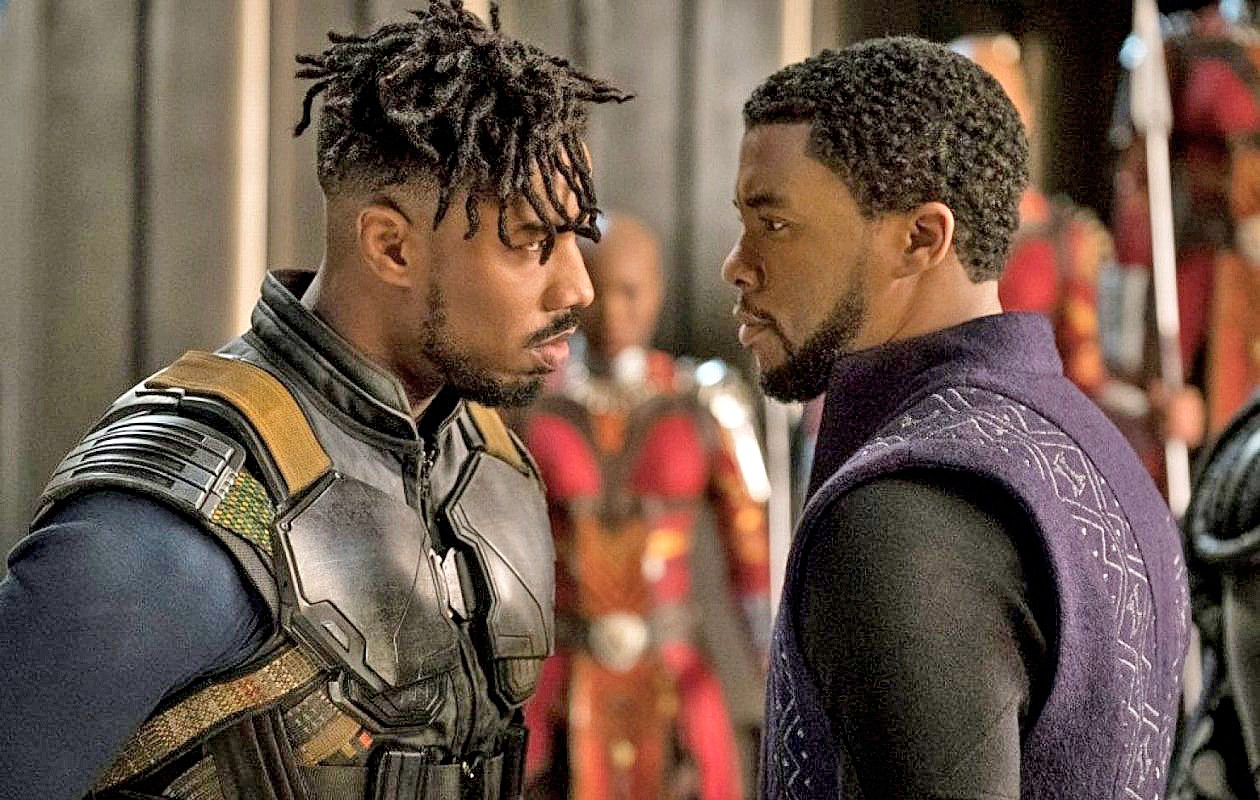
Although I saw Black Panther years ago when it originally came out, I really enjoyed re-watching it now having taken an Afrofuturism course. Our in-class discussions added a lot of depth to my understanding of the movie and the creative process that went into it. It was even more powerful having read Adilifu Nama’s first chapter from Super Black, “Color Them Black” to have a background of the lack of Black representation in traditional comics. The fact that only in 2018 we saw the first Marvel studio production to have a predominantly Black cast and crew is a little astounding to me. The amount of careful thought that went into creating the costumes and city design for Wakanda was amazing to hear about. The influence of the Maseru people in Lesotho, the written Wakandan language based on a Nigerian tongue, and the costume designs that mixed urban and traditional looks worked together seamlessly.
In this post, I’d like to focus on the depiction of Killmonger in the film. As a student of Eastern European studies, I’ve become acquainted with a lot of Marxist and revolutionary thought. As a result, although Killmonger was depicted as a misogynistic and relentless killing machine, the comparison between him and T'Challa seemed to me like a conversation about reform vs. revolution. I appreciated the perspective in class introduced by one of my classmates that compared T’Challa and Killmonger to the peaceful reform policies of Martin Luther King Jr. against the more “radically perceived” ideas of Malcolm X. Obviously, Killmonger was painted as ruthless and self-centered, which was essential to creating an antagonist, but his development into a killing machine was done systematically: First through his turbulent upbringing, and then through the institution of the military, which does prey on Black bodies.

Comments
Post a Comment